
How Long Does Window Tint Take to Cure?
· By Diego C. Mariano
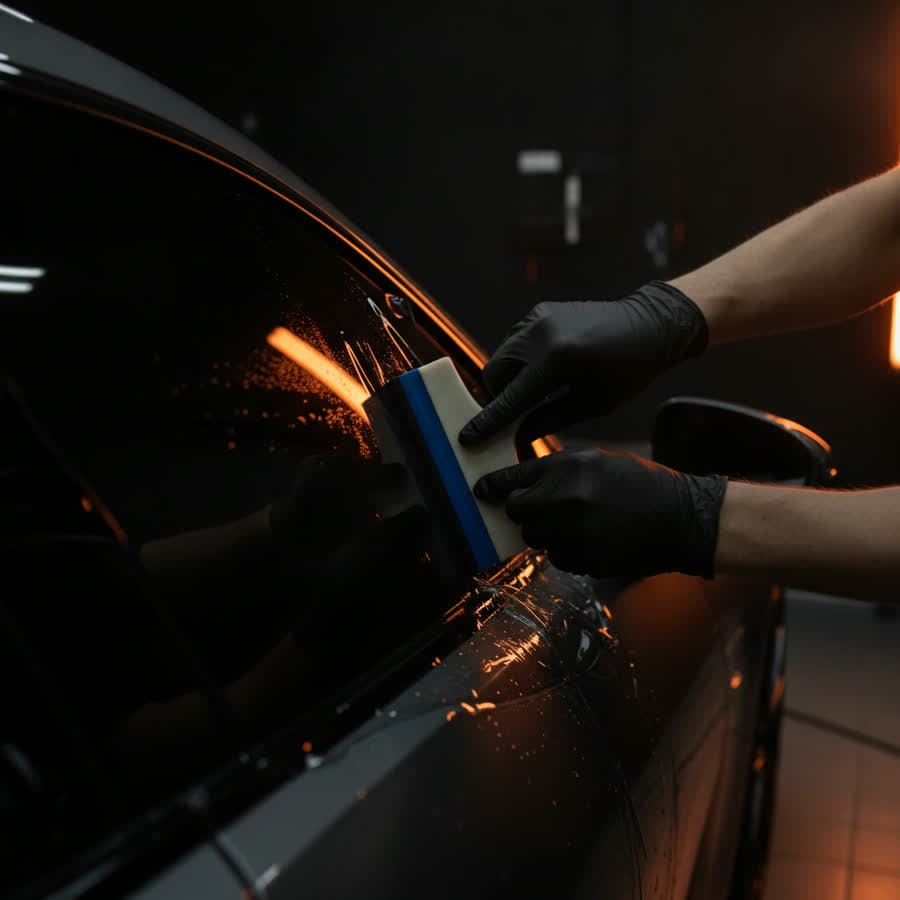
One of the first questions we hear after an install at our Newark shop is simple: how long does window tint take to cure? It is a good question, because the answer surprises people. The tint goes on in a matter of hours, but it is not truly done for days. During that gap, a little water and haze behind the film is completely normal, and knowing that saves a lot of worry.
In this guide we will explain the difference between install time and cure time, why you should leave your windows up for a few days, how New Jersey weather changes the timeline, and how to tell the difference between a tint that is simply curing and one that was installed poorly. Get this part right and your tint will look sharp for years.
Install Time vs. Cure Time: Two Different Clocks
Install time is how long your car sits in the shop. For a standard car, a full tint job usually takes a couple of hours, and larger vehicles like SUVs and trucks may take a bit longer. When you drive away, the film is already stuck to the glass and looks finished.
Cure time is a different clock entirely. To lay the film perfectly, we use a slip solution of water between the film and the glass. That water needs time to fully evaporate out through the film, and until it does, the tint is not completely bonded. This is why your tint can look done on day one but still needs several more days to reach its final, crystal-clear state.
So How Long Does It Actually Take?
For most installs in mild conditions, tint reaches a solid cure in roughly three to five days, and can take longer in cold or damp weather. A safe rule of thumb is to give it a few days at minimum, and up to a couple of weeks in winter, before you consider it fully set.
The film itself is bonded within the first day, which is why the windows stay put. What takes the extra time is the last bit of trapped moisture working its way out. Be patient during this window. Rushing it, especially by cleaning or rolling down the glass too soon, is the most common way drivers accidentally damage a good install.
Do Not Roll Your Windows Down (This Is the Big One)
The single most important rule after an install is to leave your windows up. Most shops recommend keeping them up for at least three to four days, and longer in cold weather. We will give you a specific number for your job and the season.
Here is why it matters. While the film is still curing, the adhesive has not fully set at the edges. If you roll the window down, the glass slides against the fresh film and can peel, lift, or scratch the bottom edge. That damage is not covered by the film itself, and it means a redo. A few days of keeping the windows up is a small price for tint that lasts for years.
Haze, Water Pockets, and Tiny Bubbles Are Normal
Do not panic if your brand-new tint looks slightly cloudy, foggy, or has small water pockets or bubbles in the first few days. This is one of the most common calls we get, and in almost every case it is completely normal. That haziness is the leftover slip solution still evaporating out from behind the film.
As the water disappears, the haze clears, the little pockets shrink and vanish, and the film settles into a clean, glass-clear finish. It often looks worst on the first day or two and then improves noticeably each day after. Resist the urge to press on the bubbles or peek under the edges, because that is exactly the kind of poking that causes real problems. Let the cure do its job.
Weather and Season Change Everything (Especially in NJ)
Cure time is driven by heat and sunlight, so the season matters a lot here in New Jersey. In the summer, warm temperatures and strong sun help the trapped moisture evaporate quickly, and tint can cure in just a few days. Parking in direct sunlight speeds it along.
Winter is the opposite. Cold, short, gray days slow evaporation dramatically, and a cure that takes three days in July might take a week or two in January. If you get your car tinted in the colder months, plan to leave the windows up longer and give the film extra patience. When you can, park in a sunny spot or a warmer garage to help it along. We will always tailor the aftercare advice to the time of year you come in.
Aftercare: How to Clean and Protect Fresh Tint
Once the cure is complete, your tint is easy to live with, but the first cleaning still deserves care. Wait until the film is fully cured before you clean the inside of the glass, typically at least a few days to a week depending on the season.
When you do clean it, never use ammonia-based glass cleaners. Ammonia is found in many blue window sprays, and over time it can break down the film and cause it to fade, turn purple, or peel. Use an ammonia-free cleaner or simple soap and water with a soft microfiber cloth. Wipe gently and avoid abrasive tools or paper towels. Treated this way, quality tint stays looking new for a very long time.
Normal Curing vs. a Bad Install: How to Tell
It helps to know what is normal and what is not. Normal curing looks like light haze, a few small water pockets, and minor cloudiness that all improve day by day and disappear within a week or two. That is expected and needs no action beyond patience.
A poor install looks different. Watch for large bubbles that do not shrink after a couple of weeks, peeling or lifting edges that keep spreading, visible dirt, hair, or debris trapped under the film, or sharp creases and gaps at the edges. Those do not fix themselves with time. If your tint still has real issues well after the expected cure window, that is when to call the shop. A quality installer will stand behind the work and make it right.
At Diego's Pro-Tinting in Newark, we set the expectation up front so you are never left guessing whether what you see is normal. Follow the aftercare, give it the days it needs, and reach out if anything looks off past the cure window.
Frequently asked questions
- How long does window tint take to cure?
- Most tint cures in about three to five days in mild weather, but it can take up to a couple of weeks in cold conditions. The film bonds on day one, but trapped moisture needs several days to fully evaporate.
- How long should I wait to roll my windows down after tinting?
- Keep your windows up for at least three to four days, and longer in cold weather. Rolling them down too soon can peel or scratch the fresh film at the edge before the adhesive has fully set.
- Why does my new tint look hazy or bubbly?
- Light haze, cloudiness, and small water pockets are normal in the first few days. They are caused by the water solution used during install evaporating out from behind the film, and they clear up as the tint cures.
- Does tint cure faster in summer or winter?
- Faster in summer. Heat and sunlight speed evaporation, so tint can cure in a few days in warm New Jersey weather. In winter, the cold slows it down and it may take a week or two.
- How should I clean freshly tinted windows?
- Wait until the film is fully cured, then use an ammonia-free cleaner or soap and water with a soft microfiber cloth. Avoid ammonia-based sprays, which can fade, discolor, or peel the film over time.
- How do I know if my tint was installed badly?
- Normal haze and small pockets improve day by day and vanish within a week or two. Large bubbles that never shrink, spreading peeling edges, or trapped dirt and creases are signs of a bad install and should be checked by the shop.
Related services
Serving
Found this helpful? Make us a preferred source on Google.
Ready for an exact price?
Get a free, no-pressure in-home estimate. Real numbers for your home, not a phone guess.