
Does Window Tint Really Block Heat? What Ceramic Film Does
· By Diego C. Mariano
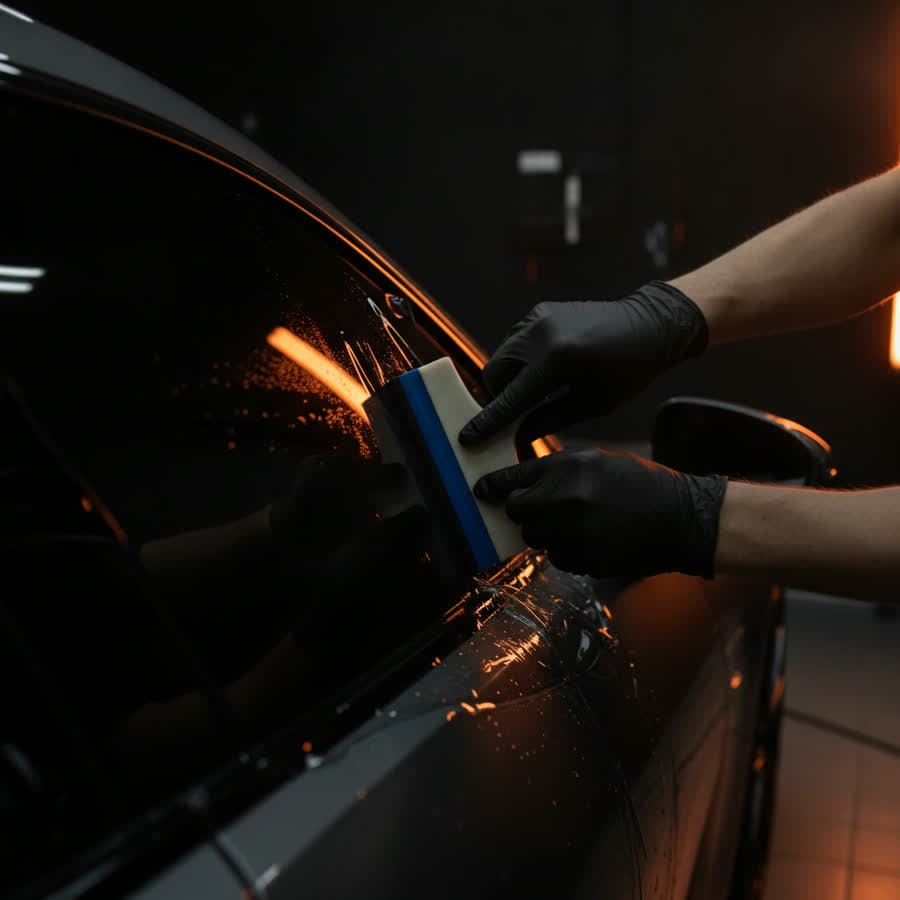
Almost every driver who asks about tint really wants to know one thing: will it keep my car cooler? The short answer is yes, quality window tint blocks a meaningful amount of heat. The longer answer is that not all tint is built the same, and the number that matters most is not how dark the film looks.
A lot of people assume that a darker window automatically means a cooler cabin. That is one of the biggest myths in the business. What actually controls heat is the technology inside the film and how well it rejects the invisible energy in sunlight. In this guide we break down how solar heat works, what the key specs mean, and why ceramic film is worth the difference for anyone driving through a New Jersey summer.
How solar heat actually reaches your car
Sunlight is not a single thing. It arrives as a mix of three types of energy: ultraviolet (UV), visible light, and infrared (IR). Each one behaves differently once it hits your glass, and understanding that split is the whole key to picking the right film.
UV rays are invisible and make up a small slice of the energy, but they are the ones that fade your dashboard, crack your leather, and damage skin over years of driving. Visible light is what you actually see, and it carries some heat. Infrared is the big one for comfort. IR is the invisible energy you feel as warmth on your arm through a window, and it is responsible for a large share of the heat that builds up inside a parked or moving car.
A cheap film might darken the visible light and look great in the lot, yet still let most of the infrared pass right through. That is why a heavily tinted car can still feel like an oven. The film blocked what you can see, not what you feel.
The two numbers that matter: TSER and IR rejection
When you compare tint, ignore the marketing words for a second and look at two figures. The first is Total Solar Energy Rejected (TSER). This is the single best measure of heat performance because it accounts for all three types of solar energy combined: UV, visible, and infrared. A higher TSER percentage means more of the sun’s total heat is kept out of the cabin.
The second is Infrared Rejection (IR rejection). Because infrared drives so much of the felt heat, a high IR rejection number tells you the film is targeting the energy you actually notice on your skin. Some premium ceramic films reject a large majority of infrared while staying relatively light in color.
Here is the trap: some sellers advertise a huge IR rejection number measured at only one narrow wavelength, which can look impressive but does not reflect real-world performance. TSER is harder to fake because it measures the full spectrum. When you want an honest comparison, ask for the TSER of the specific film, not just a headline IR figure.
Why ceramic film beats cheap dyed tint
The oldest and cheapest tint is dyed film. It works by adding a layer of dye that absorbs some light and darkens the window. Dyed film blocks glare and adds privacy, but it does a poor job on infrared heat, and the dye tends to fade to a purple or brown color after a few years in the sun.
Metalized and carbon films are a step up, adding better heat rejection and more durability. Metalized film can interfere with phone, GPS, and radio signals because of the metal particles, which is a real drawback in a modern car.
Ceramic film is the current top tier. Instead of dye or metal, it uses microscopic ceramic particles that reject a high percentage of infrared and UV while staying clear enough to keep good visibility. Ceramic does not fade to purple, does not block your signal, and holds its heat performance for the life of the film. That is why it costs more, and why it is the film most drivers are actually happy with two summers later.
Real comfort, AC load, and fuel
The payoff of good heat rejection shows up in daily driving. A cabin that starts cooler and heats up slower means your air conditioning does not have to work as hard. Your AC compressor pulls power from the engine, so an easier AC load can translate into slightly better fuel economy and less strain on the system over time.
You also feel it directly. Less infrared coming through the glass means the sun stops cooking the side of your body on a long drive. Seats, steering wheels, and dashboards stay cooler to the touch after the car sits in a lot. On the safety side, UV rejection near total protects your skin and slows the fading and cracking of your interior, which helps hold resale value.
None of this makes tint a substitute for air conditioning, and no film turns a black car into a cooler on wheels. What quality tint does is take the edge off the worst heat and let your existing AC catch up faster.
Does darker mean cooler? Not always
This is the point most people get wrong. The darkness of a film is measured as Visible Light Transmission (VLT), the percentage of visible light that passes through. A 5 percent VLT window is very dark, a 50 percent window is light. VLT controls privacy and glare, but by itself it says almost nothing about heat.
A quality ceramic film at 35 percent VLT can reject more total heat than a cheap dyed film at 5 percent VLT, because the ceramic is actually stopping infrared while the dark dyed film is mostly just blocking visible light. So a lighter, well-built film can keep you cooler than a darker, cheaper one.
This matters for legal reasons too. New Jersey has strict tint laws, including a rule that front side windows cannot be tinted below the state limit. That means you cannot always chase darkness on the front glass anyway. The smart move is to pick a lighter legal shade with strong TSER, which gets you heat rejection and comfort without a ticket.
How to compare film specs before you buy
When you shop, ask for three numbers on the exact film going on your car: VLT (darkness), TSER (total heat rejected), and UV rejection. Get them for the specific product and shade, because performance changes with the shade. A quality shop will have these on hand and will not dodge the question.
Be skeptical of a single flashy IR number with no TSER behind it. Ask whether the film is dyed, carbon, or true ceramic, and ask about the warranty against fading, bubbling, and peeling. A real manufacturer warranty is a sign the film is built to last, not a bargain-bin roll.
Finally, weigh installation quality as much as the film itself. Even the best ceramic film performs poorly if it is installed with bubbles, dust, or gaps at the edges. The film and the hands applying it are one package.
How Diego’s Pro-Tinting approaches heat
At Diego’s Pro-Tinting in Newark, NJ, the starting point is always what you want the film to do. If your priority is a cooler cabin on hot Newark, Elizabeth, Harrison, and Kearny commutes, we steer you toward ceramic film and match a legal shade to strong TSER so you get comfort without crossing New Jersey’s tint limits.
We walk through the actual specs of the film going on your car, not just a sample in the sun, so you know what you are paying for. Every install is done with the goal of clean edges and no bubbles, because the film only performs as well as the way it is applied.
If you are not sure which shade or film is right for your car and your budget, reach out for a free quote. We will explain your options in plain language and give you an honest recommendation for a New Jersey summer.
Frequently asked questions
- Does window tint actually block heat?
- Yes. Quality tint rejects a share of the sun’s total solar energy, and ceramic film in particular blocks a high percentage of infrared, which is the energy you feel as warmth. The heat reduction is real, though it depends heavily on the type and quality of the film.
- What is the best tint for blocking heat?
- Ceramic film is the top choice for heat rejection. It uses ceramic particles to block infrared and UV without fading or interfering with your phone and GPS signals. Look at the Total Solar Energy Rejected (TSER) figure to compare heat performance across films.
- Does darker tint keep the car cooler?
- Not necessarily. Darkness (VLT) controls privacy and glare, not heat. A lighter, high-quality ceramic film can reject more total heat than a darker, cheaper dyed film. Focus on TSER and IR rejection rather than how dark the window looks.
- What does TSER mean on window tint?
- TSER stands for Total Solar Energy Rejected. It measures the percentage of all solar energy, UV plus visible plus infrared, that the film keeps out of your cabin. It is the single most useful number for comparing how much heat a film blocks.
- Can I get dark heat-blocking tint on my front windows in New Jersey?
- New Jersey limits how dark front side windows can be, so you cannot chase maximum darkness on the front glass legally. The good news is a lighter ceramic film with high TSER still rejects a lot of heat while keeping you within the law.
Related services
Serving
Found this helpful? Make us a preferred source on Google.
Ready for an exact price?
Get a free, no-pressure in-home estimate. Real numbers for your home, not a phone guess.