
Ceramic vs Carbon Window Tint: Which Is Right for Your Car?
· By Diego C. Mariano
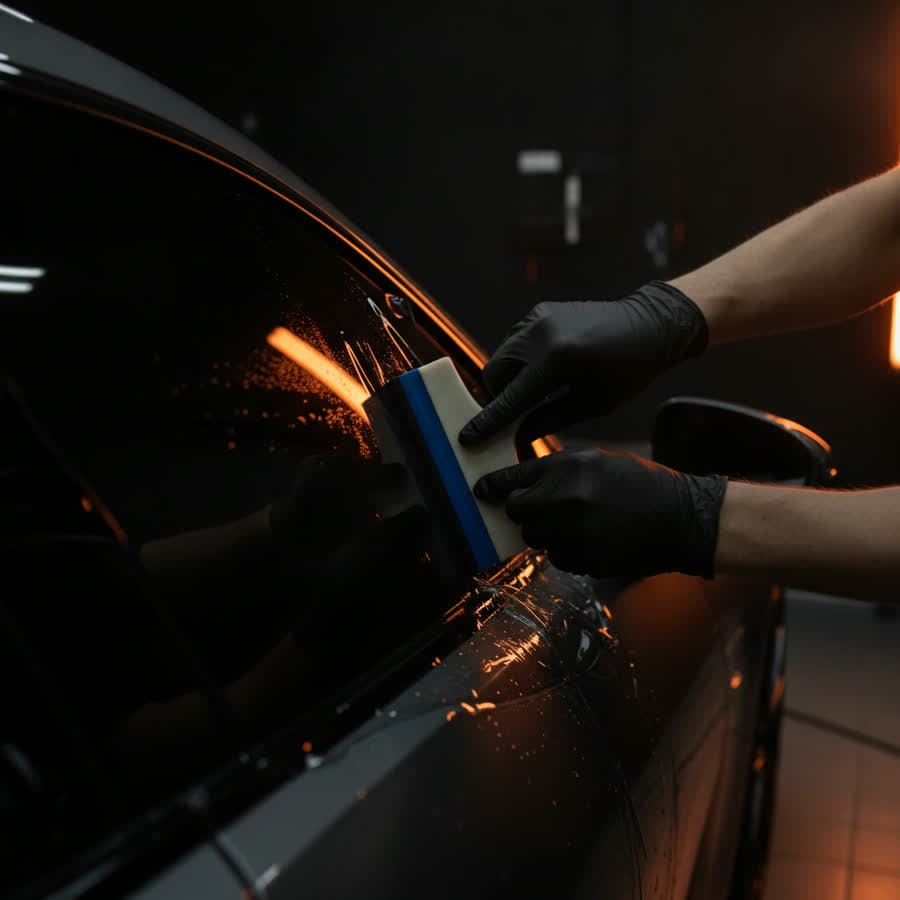
When drivers in New Jersey decide to tint their windows, the choice usually comes down to two words: ceramic or carbon. Both are big upgrades over the cheap dyed film that fades and turns purple, and both give you a clean, dark look that lasts. The difference is in what each one does under the surface, especially how much heat it keeps out and how much you pay for it.
This guide breaks down ceramic vs carbon window tint the way we would explain it at the counter: how each film is made, how it handles heat, UV, glare, and phone signal, whether it stays true in color, how long it lasts, and what the price trade-off really buys you. By the end you will know which film fits your car and the way you drive.
How Each Film Is Made
Carbon tint is built with carbon particles mixed into the film layers. Those particles block a meaningful amount of heat and give the film a deep, matte, non-reflective black look that many people love. Because carbon does not use metal, it does not interfere with signals, and it resists fading far better than old dyed films.
Ceramic tint uses microscopic ceramic nano-particles instead. Ceramic is a non-conductive, non-metallic material that is extremely good at rejecting infrared heat while staying optically clear. This is the newer, more advanced technology, and it is why ceramic sits at the top of the tint market. Both films are non-metallic, so neither will mess with your electronics, but ceramic simply pushes the performance higher.
Heat Rejection: The Biggest Difference
Heat is the number one reason people tint their windows, and this is where ceramic pulls clearly ahead. Most of the heat you feel through glass comes from infrared radiation, and ceramic film is engineered specifically to block a very high percentage of it. On a hot day sitting in traffic, that translates to a cabin that stays noticeably cooler and an air conditioner that does not have to work as hard.
Carbon still rejects solid heat and is a real improvement over dyed film or no tint at all. But it does not match the infrared rejection of a quality ceramic film. If you commute long distances, sit in stop-and-go traffic, or park in the sun with no shade, the extra heat control from ceramic is the single most noticeable everyday benefit you will feel.
UV Protection and Interior Comfort
Both carbon and ceramic block the large majority of harmful UV rays, which protects your skin on long drives and keeps your dashboard, seats, and trim from fading and cracking over the years. This is a health and resale benefit that a lot of drivers overlook until their interior starts looking tired.
Ceramic generally holds a slight edge on total UV and infrared performance, but the practical point is that either film is a huge step up from bare glass. If protecting a leather interior or reducing sun exposure for a family vehicle is a priority, both films deliver, with ceramic offering the strongest all-around shield.
Glare, Clarity, and Night Driving
Ceramic film is known for staying crystal clear even at darker shades, which keeps your view sharp and cuts down on harsh glare from the sun and from oncoming headlights at night. That clarity is part of why premium ceramic feels so comfortable: you get privacy and heat control without a hazy or murky view out the glass.
Carbon also reduces glare and has that attractive flat, non-reflective finish, though very dark carbon can feel slightly less crisp than ceramic at the same shade. For drivers who do a lot of night driving or who are sensitive to glare, ceramic is often the more comfortable choice, while carbon still handles daytime glare well.
Signal Interference: Not an Issue With Either
Older metalized tints could interfere with cell signal, GPS, and radio, which was a real headache for drivers. The good news is that both carbon and ceramic are non-metallic, so neither one blocks your phone, navigation, keyless entry, or tire-pressure sensors.
This is one area where you do not have to choose. Whether you go carbon or ceramic, your electronics will work exactly as they did before. The decision comes down to heat, clarity, durability, and budget rather than any worry about signal.
Color Stability: No More Purple Windows
One of the most satisfying things about both films is that they do not turn purple. That faded, purple look you see on older cars comes from cheap dyed film breaking down under UV exposure. Carbon and ceramic both use stable, non-dye technology, so they hold their deep black tone for the long haul.
Carbon resists fading very well, and ceramic is equally stable, keeping its true color year after year. Either way, the days of watching your tint slowly turn a washed-out shade of purple are behind you. Your windows will look the way they did on day one for a long time.
Durability and Warranty
Both films are built to last, and quality versions of each typically carry a strong warranty against bubbling, peeling, cracking, and color change, often for as long as you own the vehicle. Ceramic tends to be the most robust performer overall, but a well-made carbon film installed correctly will give you years of clean, reliable service.
Durability also depends heavily on the install. Even the best film will fail early if it is applied with trapped bubbles, dirt, or lifted edges. That is why the shop matters as much as the film. A careful, professional installation is what lets any warranty actually mean something over the life of the tint.
The Price Trade-Off and How to Choose
Carbon is the more budget-friendly of the two and delivers a fantastic look with solid heat and UV protection. Ceramic costs more because the technology and materials are more advanced, and that extra cost buys you the highest heat rejection, the best clarity, and top-tier UV blocking. For many drivers, ceramic is worth it; for others, carbon is exactly the right balance of performance and price.
A simple way to decide: if you park in the sun, commute far, sit in heavy traffic, or want the absolute best comfort, lean ceramic. If you want a great-looking, long-lasting upgrade at a friendlier price, carbon is a smart pick. Neither is a wrong answer, and the right choice depends on how and where you drive.
Our Recommendation Approach at Diego’s Pro-Tinting
We do not push everyone toward the most expensive film. When you come to Diego’s Pro-Tinting in Newark, we ask about your daily driving, your budget, and what bothers you most, whether that is heat, glare, privacy, or protecting your interior. Then we recommend the film that genuinely fits, and we keep the darkness level within New Jersey rules so you stay street-legal.
Serving drivers across Newark, Elizabeth, Harrison, and Kearny, our goal is honest advice and clean, professional work with quality carbon and ceramic film. Tell us how you drive and what you want, and we will help you choose between ceramic and carbon with a clear, fair quote and no pressure.
Frequently asked questions
- What is the main difference between ceramic and carbon tint?
- The biggest difference is heat rejection. Ceramic uses ceramic nano-particles to block a much higher share of infrared heat while staying crystal clear, and it usually costs more. Carbon blocks solid heat, resists fading, and looks great at a friendlier price. Both are non-metallic, so neither blocks phone or GPS signal.
- Does ceramic tint really keep the car cooler than carbon?
- Yes. Ceramic film is engineered to reject a very high percentage of infrared heat, which is what you feel through the glass. On hot days and in traffic, ceramic keeps the cabin noticeably cooler and eases the load on your air conditioner more than carbon does.
- Will either film interfere with my phone or GPS?
- No. Both carbon and ceramic are non-metallic, so they do not block cell signal, GPS, keyless entry, or tire-pressure sensors. Only older metalized tints caused that problem, and neither of these films is metalized.
- Do carbon and ceramic tint turn purple over time?
- No. The purple look comes from cheap dyed film breaking down under UV. Carbon and ceramic both use stable, non-dye technology, so they hold their true deep-black color for years without fading to purple.
- Which tint should I choose for my car?
- If you park in the sun, commute far, or want the best clarity and coolest cabin, ceramic is the top choice. If you want a great-looking, durable upgrade at a lower price, carbon is a smart pick. The right answer depends on how and where you drive, and we are happy to help you decide.
- Is carbon tint still a good option, or should I always go ceramic?
- Carbon is a very good option. It blocks solid heat, resists fading, avoids signal issues, and looks clean and matte. Ceramic simply pushes heat rejection and clarity higher for a higher price. Many drivers are perfectly happy with carbon, especially on a budget.
Related services
Serving
Found this helpful? Make us a preferred source on Google.
Ready for an exact price?
Get a free, no-pressure in-home estimate. Real numbers for your home, not a phone guess.